
Laweba Consulting · Strategic briefH1 2026 edition

eCommerce
Performance 2026

Market signals to turn into concrete actions.

Sources used
H1 2026 edition
Fevad · Médiamétrie · Deloitte · McKinsey · Adobe · Baymard · Shopify · Ahrefs · Seer · Salesforce · Mixpanel

The strategic brief to spot what is actually moving in eCommerce — and identify the blind spots worth investigating first.

eCommerce growth has not disappeared. It has simply become more selective.

In 2026, winning will no longer mean generating more traffic. It will mean better understanding where performance is created, where it is lost, and which initiatives actually deserve a spot on the roadmap.

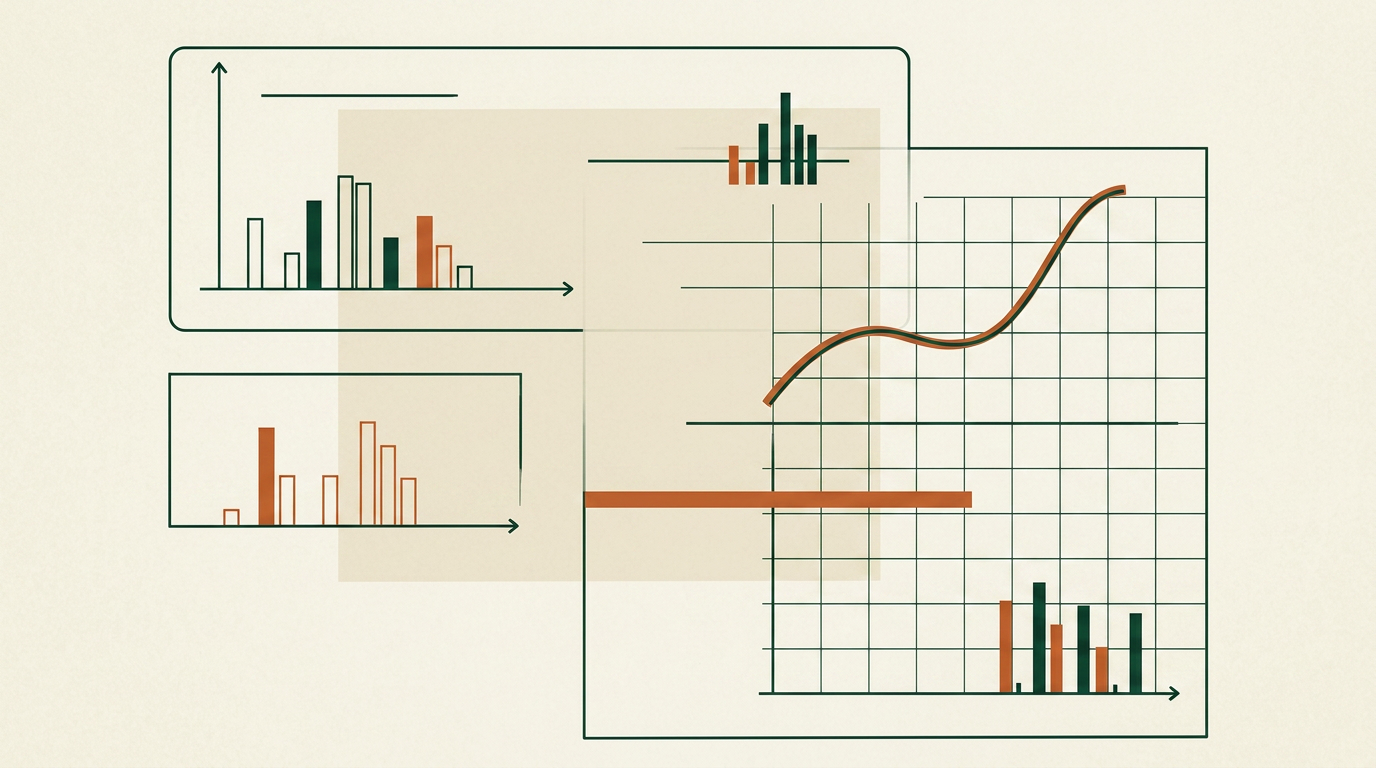
Abstract editorial composition — data, measurement and market signals
H1 2026 edition · Plate I
12 sections · ~ 15 min readMarket / Acquisition / Mobile / Checkout / SEO / AI / Data
Section 02 — Summary

7 signals to keep in mind before shaping your 2026 roadmap.

No need to chase every trend. A few signals are enough to steer the right trade-offs.

Signal 01
€196.4B

eCommerce keeps growing, but the average basket is shrinking

French eCommerce reaches €196.4B in 2025 (+7%). Transactions are up +10% to 3.2B, but the average basket drops to €62 (-3%).

Fevad — French eCommerce Report 2025
Implication

Growth now relies more on frequency and conversion than on basket uplift.

Signal 02
51.9M

eCommerce has become a mass behavior

51.9 million French users — 80.7% of the population — visited at least one Top 20 eCommerce site or app every month in Q4 2025.

Fevad / Médiamétrie — Q4 2025
Implication

Differentiation is no longer about being online — it is about the quality of the experience.

Signal 03
47%

Consumers are arbitrating more on value

47% of global consumers are categorized as value seekers. 35% of high-income households share the same behaviors.

Deloitte — Global Consumer Products Outlook 2026
Implication

The challenge is not low price, it is clarity of perceived value.

Signal 04
3,600+

Mobile remains a fragile conversion battleground

Over 3,600 mobile usability issues identified, structured into more than 400 mobile UX guidelines.

Baymard Institute — Mobile UX Research
Implication

Mobile losses usually stem from a stack of micro-frictions.

Signal 05
70.22%

Checkout is still a major leakage zone

Documented average cart abandonment rate, calculated from 50 eCommerce studies.

Baymard — Cart Abandonment Statistics
Implication

Checkout remains one of the largest pools of uncaptured revenue.

Signal 06
+393%

AI becomes an eCommerce traffic and influence source

Traffic from AI sources to US retail sites grew +393% YoY in Q1 2026.

Adobe Digital Insights — 2026
Implication

AI-driven traffic is still emerging, but signals a shift in product discovery.

Signal 07
−58%

SEO is entering a deep transformation

An AI Overview is associated with a 58% average CTR drop for a position-1 page on informational queries.

Ahrefs — AI Overviews CTR study, Feb. 2026
Implication

SEO must evolve toward visibility, citation and presence inside generative answers.

Section 03 — Market state

eCommerce is entering a more selective phase.

eCommerce is not slowing down everywhere. But easy growth is becoming rarer.

In France, the market keeps progressing: €196.4B in online sales in 2025, +7% growth, 3.2B transactions and +10% YoY. But the average basket falls to €62 — a sign that growth is driven by purchase frequency more than order value.

At the same time, eCommerce audiences are massive: 51.9 million French users visit at least one Top 20 eCommerce site or app every month.

Formula

Performance = qualified traffic × frictionless experience × perceived value × reliable measurement × execution capacity

Consumer signal
·

The 2026 consumer arbitrates more — but does not only buy cheaper.

The search for value is becoming structural. Consumers are not only chasing a discount. They are looking for a justification.

Why this product is worth its price, what differentiates it, what is included, whether delivery is reliable, whether returns are simple, whether reviews reassure: all questions that now condition the purchase.

Benchmark

Deloitte reports that 47% of global consumers are value seekers. 35% of high-income households also adopt these arbitration behaviors. Only about a third of brands are perceived as worth it.

What it means

Consumers want a justification — not just a low price.

To investigate
  • Clarity of the value proposition
  • Price vs. value perception
  • Reassurance on key pages
  • Readability of product benefits
  • The role of reviews, proofs, guarantees and services
  • Consistency between acquisition message and on-site experience
Warning signals
  • Users browse products but hesitate to add to cart
  • Promotions drive traffic but little margin
  • Product benefits are less visible than technical specs
  • Fees, lead times or conditions are discovered too late in the journey
  • Teams do not distinguish a price problem from a perceived-value problem
Key question

Do your visitors quickly understand why they should buy from you rather than elsewhere?

— P0
Priority 1
·

Stop counting visits. Start measuring their value.

Not all sessions are equal. Some arrive, bounce and disappear. Others browse a product page, compare, add to cart, come back, then buy.

The question is no longer “how much traffic did we generate?” but “which traffic actually moves the business forward?”

What it means

Acquisition must be steered beyond sessions, clicks and platform ROAS.

To investigate
  • Session quality by channel
  • Actual progression through the journey
  • Gaps between media performance and business performance
  • Contribution of entry pages to conversion
  • Behavioral differences between mobile and desktop
  • Weight of new vs returning visitors
Warning signals
  • Traffic grows, but revenue does not follow
  • Platform ROAS looks good, but on-site conversion stays low
  • Some channels drive many sessions but little visible intent
  • Teams do not share the same reading of acquisition performance
  • Media reports and analytics tell two different stories
Key question

Do your channels generate traffic, or real conversion opportunities?

— P1
Priority 2
·

Mobile is not a small desktop.

Mobile is often the first contact, the first scroll, the first hesitation, the first comparison. Yet it is still too often designed as a reduced desktop version.

On mobile, users see less, tolerate slowness less, abandon faster in the face of uncertainty and compare in a more fragmented context.

Benchmark

Baymard has identified 3,600+ mobile usability issues, structured into 400+ mobile UX guidelines.

To investigate
  • Conversion gaps between mobile and desktop
  • Readability of key information on small screens
  • Understanding of filters, menus, CTAs and selectors
  • Smoothness of add-to-cart
  • Quality of the mobile cart and checkout experience
  • Frustration signals invisible in standard KPIs
Warning signals
  • Mobile concentrates traffic but under-contributes to revenue
  • Mobile users browse products without progressing through the funnel
  • Mobile performance is analyzed only via global conversion rate
  • Mobile irritants are treated as isolated bugs rather than a journey issue
  • The mobile app is assumed to perform well without a dedicated UX benchmark
Key question

Does your mobile experience reduce purchase friction — or just make it less visible?

— P2
Editorial illustration of a conversion funnel
Plate II — Funnel

Every step of the journey is an opportunity to lose — or to win — revenue.

Priority 3
·

Plug the leaks in the funnel.

Lost revenue is not always visible. It hides in a rigid identification step, fees revealed too late, a blocking form, a missing payment method, weak reassurance, a silent technical error.

Checkout is not just a technical step. It is the moment when intent becomes revenue.

Benchmark

Baymard documents a 70.22% average cart abandonment rate based on 50 eCommerce studies.

What it means

When every session is harder to capture, every funnel drop-off becomes direct lost revenue.

To investigate
  • Steps where users drop off
  • Differences between new and returning customers
  • Friction tied to identification
  • Clarity of fees, lead times and conditions
  • Technical or ergonomic friction points
  • Mobile impact on order completion
  • Consistency between cart, delivery, payment and reassurance
Warning signals
  • Many users add to cart but few start checkout
  • Transition to delivery or payment looks abnormally low
  • New customers convert much less than returning ones
  • Teams suspect friction but have no reliable step-by-step reading
  • Checkout errors or drop-offs are not linked to a business estimate
Key question

Where is your revenue lost — before the cart, in the cart, or in the checkout?

— P3
Priority 4
·

Being found is no longer enough. You have to be understood, cited and recommended.

SEO is not disappearing. But its role is changing. Engines, marketplaces, social platforms and AI assistants are reshaping product discovery.

Users no longer search with keywords only: they formulate needs, constraints, comparisons and usage scenarios.

Benchmark

Ahrefs (Feb. 2026): an AI Overview is associated with a 58% average CTR drop for a position-1 page. Seer Interactive (53 brands, 5.47M queries) sees CTR on AIO queries rebound from 1.3% in Dec. 2025 to 2.4% in Feb. 2026 — the environment is still unstable.

What it means

Organic traffic still matters. But click-less visibility is becoming a new competitive territory.

To investigate
  • Dependency on classic SEO
  • Organic CTR evolution on strategic queries
  • Brand visibility inside generative answers
  • Ability of content to answer precise purchase intents
  • Depth of product data
  • Presence on long-tail and conversational queries
  • Ability to be cited by reliable third-party sources
Warning signals
  • Strong dependency on classic SEO traffic
  • Organic CTR drops despite good rankings
  • Few comparison or decision-support contents
  • Incomplete or undifferentiated product data
  • No tracking of visibility inside AI answers
  • SEO teams still steer only on rankings and traffic
Key question

Is your brand visible where customers still search, or where they have already started to decide?

— P4
Plate III — Discoverability

Product discovery becomes a matter of structure, context and proof.

Abstract constellation — conversational search and product data
Priority 5
·

AI does not yet replace the purchase journey. It compresses it.

AI is no longer just an internal productivity tool. It is starting to influence discovery, comparison, recommendation and decision.

It can shift part of the discovery off-site — or send more advanced visitors, sometimes directly to product pages. The point is not “making AI content”, but preparing your product, content and data ecosystem to be read and exploited by these new intermediaries.

Benchmark

Adobe: AI traffic to US retail sites +393% YoY in Q1 2026, +269% YoY in March, with +12% higher engagement. Shopify Enterprise: visitors referred by AI convert ~50% better than organic search. McKinsey: $3T–$5T of global B2C retail spend potentially operated by AI agents by 2030 — yet 83% of European grocery retailers are still emerging or developing on AI.

What it means

Emerging volumes, strong signals. AI is starting to compress the purchase journey.

To investigate
  • Quality and depth of product data
  • Clarity of attributes, benefits and use cases
  • Presence of exploitable trust proofs
  • Ability of content to answer precise intents
  • Brand visibility inside AI environments
  • Gap between AI ambition and real operational maturity
  • Ability to measure AI-driven traffic and conversion signals
Warning signals
  • Product pages are visually rich but poor in useful information
  • Editorial content is generic or poorly tied to purchase decisions
  • Product data is incomplete, heterogeneous or hard to exploit
  • Teams talk about AI without clarifying data and content foundations
  • AI sources are not identified in acquisition reports
Key question

Are your products structured well enough to be understood, compared and recommended by AI?

— P5
Priority 6
·

Does your data really let you decide?

GA4 says one thing. The back-office says another. The CRM adds a third version. Media platforms often tell their own story.

Result: teams spend more time arguing about numbers than deciding on actions. In 2026, data must not only be available — it must be reliable, readable and actionable.

Benchmark

Salesforce makes its Shopping Index available to track global eCommerce trends: digital growth, traffic and orders by device, search usage, conversion, average basket, cart abandonment, social traffic.

What it means

A roadmap built on unstable data becomes political. A roadmap built on reliable data becomes an action plan.

To investigate
  • Consistency between different data sources
  • Reliability of key journey events
  • Gaps between analytics, back-office, CRM and media platforms
  • Shared understanding of KPIs
  • Ability of dashboards to actually steer trade-offs
  • Reading by device, channel, page type and user segment
Warning signals
  • GA4, back-office and media platforms tell different stories
  • Teams regularly debate the reliability of numbers
  • KPIs exist but do not trigger clear decisions
  • Dashboards are consulted but rarely used to prioritize the roadmap
  • KPI definitions vary across teams
Key question

Does your data really enable decisions — or only reporting?

— P6
Abstract composition — dashboards and eCommerce indicators
Plate IV — Steering

A good dashboard does not describe the past. It triggers a decision.

Section 11 — Prioritization matrix

Where to start?

Not all actions are equal. The right priority is not the trendiest — it is the one that combines clear business impact, sufficient evidence, realistic execution capacity and reliable measurement of the effect.

Mobile conversion diagnostic
P1
ImpactHigh
ComplexityMedium
Checkout diagnostic
P1
ImpactHigh
ComplexityMedium
Acquisition quality reading
P1
ImpactHigh
ComplexityMedium
Perceived value / reassurance diagnostic
P1
ImpactHigh
ComplexityMedium
Tracking / consent / measurement audit
P1
ImpactHigh
ComplexityMedium to high
SEO / Search Everywhere diagnostic
P2
ImpactMedium to high
ComplexityMedium
Product data & AI diagnostic
P2
ImpactMedium to high
ComplexityMedium
New vs returning analysis
P2
ImpactMedium to high
ComplexityMedium
Retention / repeat purchase
P3
ImpactMedium to high
ComplexityHigh
Priority 1

Secure the fundamentals

Mobile, checkout, acquisition, perceived value and measurement.

Priority 2

Prepare the new relays

Search Everywhere, product data, AI, segmentation and returning journeys.

Priority 3

Scale up

Retention, repeat purchase, advanced personalization, CRO governance.

The right roadmap is not the one that piles ideas. It is the one that turns the best signals into measurable actions.

Section 12 — Self-diagnostic

Is your eCommerce ready for 2026?

10 questions to know whether your growth rests on solid foundations — or on a few blind spots to address quickly.

Maturity score
0/20
  1. 01

    Do you measure conversion by device, channel and template?

  2. 02

    Do you have a reliable view of checkout drop-offs by step?

  3. 03

    Is your mobile experience audited independently of desktop?

  4. 04

    Do you track traffic quality beyond sessions?

  5. 05

    Do you analyze perceived value and reassurance across the journey?

  6. 06

    Is your analytics data reconciled with the back-office?

  7. 07

    Is your CRO roadmap prioritized by business impact?

  8. 08

    Are you tracking the SEO shift toward AI answers and zero-click?

  9. 09

    Are your product pages structured for AI use cases?

  10. 10

    Do you have an executive dashboard that is actually used?

Trends do not create growth on their own. The right trade-offs, the right measurement and the right actions are what turn market signals into performance.

Spotted some warning signals? The next step is to quantify them.

Laweba Consulting partners with eCommerce, data, product and acquisition leaders to identify the main revenue-loss points along their digital journey.

In 30 days, the goal is to answer three questions:

  1. 01Where is performance actually deteriorating?
  2. 02Which levers can drive the most impact?
  3. 03Which initiatives should we prioritize on the eCommerce roadmap?
Areas of intervention
Analytics auditUX & friction auditFunnel analysisCRO & experimentationDashboardingMeasurement governanceSEO / Search Everywhere framingProduct data & AI diagnostic